

There is something comforting about walking into a home that feels warm and welcoming, even when the furniture isn’t new, the decorations don’t all match, and the space isn’t particularly fancy. A cozy home isn’t necessarily the one that looks the most impressive in photographs. More often than not, it is the home that makes you want to take off your shoes, sit down, stay a while, and feel that you are exactly where you belong.
The good news is that creating that feeling doesn’t require a major renovation or a large decorating budget. In many cases, you can make a noticeable difference simply by paying attention to what you already have, removing some of what you don’t need, and making a few thoughtful changes to the way your rooms are arranged and used.
If your home has been feeling a little dull, cluttered, or simply less inviting than you would like, you don’t have to change everything at once. Start small, work with what you already own, and focus on making your home more comfortable for the people who actually live there.
Start With What You Already Have
Before you start shopping for new curtains, cushions, furniture, or decorations, take a good look around your home. You may already have many of the things that could make the space feel warmer, but they might be hidden away, sitting in the wrong place, or surrounded by so much clutter that they don’t really stand out.
A chair that has become a place for clothes might be much more useful when it is cleared and positioned beside a window. A blanket tucked away in a cabinet could make the sofa more comfortable in the evening, while a few books, a plant, or a family photograph might give an otherwise empty shelf some personality.
This is one reason I like starting with what is already in the house. It keeps the process affordable while encouraging you to see your belongings differently. Instead of immediately asking what you need to buy, ask yourself what you already own that could be used better.
Clear the things that make a room feel heavy
Sometimes a room doesn’t need more decoration. It simply needs fewer things competing for your attention.
You don’t have to declutter the whole house in one ambitious weekend, either. Pick one area that you see frequently, such as the dining table, the kitchen counter, the top of a cabinet, or the sofa, and remove the things that have accumulated there without really having a purpose.
Once you have created a little breathing room, you may find that the room already looks better than you remembered.
There is something surprisingly effective about having a clear surface where there used to be a pile of miscellaneous things. It makes the entire space feel calmer without costing anything.
Rearrange the Furniture Before You Buy New Furniture
When a room feels uncomfortable, our first instinct can be to assume that we need something new. Sometimes, however, the problem isn’t the furniture itself but where we have placed it.
Try moving the sofa, changing a chair’s direction, or repositioning a small table. Think about how people actually move through the room. Is there enough space to walk comfortably? Can people sit together and have a conversation? Is the furniture arranged around how the room is used, or is it simply where it has always been?
You may need to live with a new arrangement for a few days before deciding whether you like it. What looks unusual at first may turn out to work much better once you get used to it.
A cozy home should be comfortable to live in, not just pleasing to look at.
Create One Comfortable Corner
You don’t have to transform the entire house to make it feel more inviting. Sometimes it is enough to create one small area that makes you want to slow down.
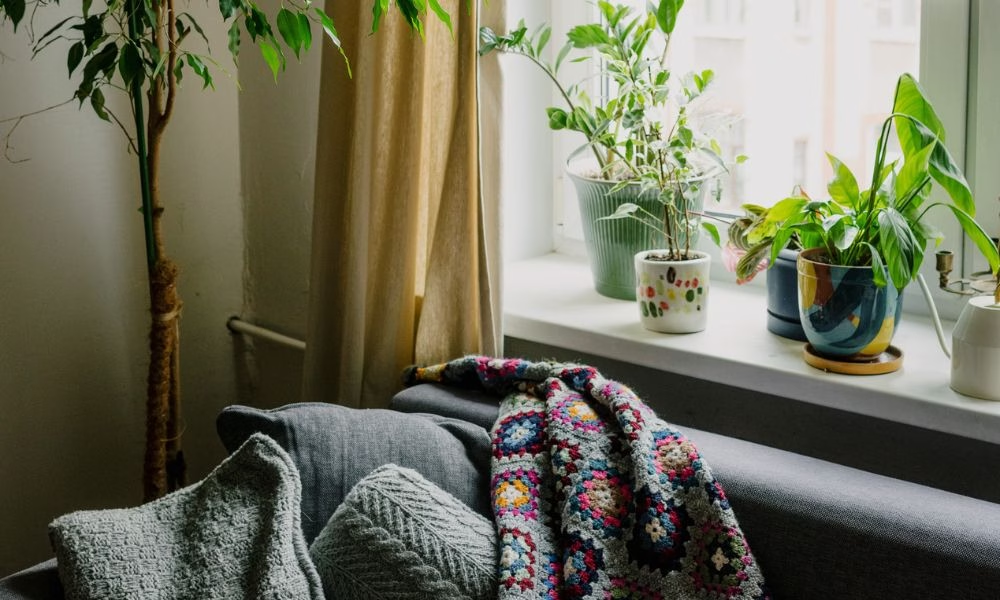
Perhaps there is a chair near a window that could serve as a reading spot, or a little corner of the bedroom for journaling, prayer, or quiet time. You might already have a small table, a lamp, a cushion, and a blanket that could be brought together to create a space with a little more purpose.
The important thing is not how much you spend on the corner, but whether it encourages you to actually use it.
A home becomes more enjoyable when it includes places where you can do the things you love, rather than simply spaces decorated to look nice.
Use Lighting to Change the Mood
Lighting has a surprisingly big effect on how a room feels, particularly in the evening.
If your home relies mostly on bright overhead lights, try adding a small lamp to a corner where you spend time at night. A warm-toned bulb can make a living room or bedroom feel considerably softer without requiring any other changes.
You don’t need to buy several lamps or install elaborate lighting. Even moving an existing lamp to a better location can change the atmosphere.
Natural light matters too, so keep windows as open and unobstructed as practical during the day. Clean curtains and windows can also make a room feel brighter without requiring any decorating budget.
Add Softness With Things You Already Own
Texture is one of those details that can make a room feel comfortable without being particularly noticeable. A sofa with a soft blanket, a chair with a cushion, or a bedroom with pleasant bedding can feel much more inviting than a room filled with hard, bare surfaces.
Before buying anything new, look through your linen cabinet or storage areas. You may have blankets, cushions, throws, table runners, or curtains that could be used somewhere else.
And don’t worry too much about making everything coordinate perfectly. A home can feel more natural when different textures and colors come together because they belong to the people living there, rather than because they were purchased as a matching set.
Bring a Little Nature Into the Room
Plants are an easy way to make a space feel more alive, but you don’t need to spend a lot of money building an indoor garden.
If you already have plants, see whether you can propagate them from cuttings. You might also have friends or relatives who are happy to share a small plant with you. Even a single plant on a table or shelf can add some life to an otherwise plain corner.
If you’re not particularly good at keeping plants alive, choose something low-maintenance rather than adding plant care to your household responsibilities. There is no prize for having the largest collection of houseplants.
You can also use other natural elements, such as flowers from your garden, branches, leaves, or even a simple bowl of fresh fruit, to add warmth and color to a room.

Let Your Home Tell Your Story
A home becomes more inviting when the things around you reflect the people, experiences, and memories that are meaningful to you. Instead of filling your walls and shelves with whatever happens to be popular at the moment, look around for the things you already own that tell a little of your family’s story, whether that’s a photograph from an important occasion, your child’s artwork, a souvenir from a memorable trip, something handmade by a friend or relative, a favorite book, or even a small gift that reminds you of someone you love.
These personal touches don’t have to be expensive or carefully arranged to look like they belong in a professionally decorated home. In fact, sometimes the slightly imperfect arrangement is what makes a space feel more genuine. A home should reflect the life being lived in it, rather than trying to convince everyone who walks through the door that it came straight out of a catalog.
If you have meaningful items tucked away in drawers or boxes because you aren’t sure where to put them, consider bringing a few into the spaces where you spend the most time. You don’t need to display everything at once, and you certainly don’t need to turn every surface into a collection of decorations. A few carefully chosen pieces can make a room feel much more personal without adding unnecessary clutter.
Make the Entrance Feel Welcoming
The entrance to your home sets the tone for how the house feels, but you don’t need a large foyer or an elaborate entryway to make it pleasant.
Start by making the area functional. Give shoes, bags, keys, umbrellas, and other frequently used items a place to put them away, rather than letting them gradually take over the entrance. If there is room, a small basket, hook, mat, plant, or piece of artwork can add some warmth.
More importantly, think about how the entrance feels to you when you come home.
After a tiring day, coming through a door into a reasonably tidy, easy-to-navigate area can be a small but meaningful pleasure. Your home should welcome you too, not only the guests who visit.
Pay Attention to What Your Home Smells and Sounds Like
We often focus so much on how a home looks that we forget how much our other senses influence how a space feels.
A clean-smelling home can immediately seem more comfortable, and you don’t necessarily need expensive candles, diffusers, or air fresheners to achieve that. Regularly airing out rooms when the weather allows, keeping fabrics fresh, promptly addressing kitchen odors, and maintaining a clean bathroom can accomplish quite a lot.
You can also use simple scents that you already enjoy, whether that’s fresh citrus, herbs, coffee, or something cooking in the kitchen.
Sound can have a similar effect. Depending on the time of day, a home might be filled with conversation, music, children’s voices, the sounds of cooking, or simply the quiet that comes after everyone has settled down for the evening. There is no single sound that makes a home peaceful. What matters is creating an environment where the people living there can feel comfortable.
Make Your Home Comfortable for Real Life
This may be the part of creating a cozy home that is easiest to forget when we spend too much time looking at beautifully decorated homes online.
Your home is going to get messy sometimes.
Someone will leave something on the dining table. Laundry will need to be folded. The kitchen will need cleaning again shortly after you cleaned it. A child may leave books in the living room, someone may eat in front of the television, and there will probably be days when absolutely nothing looks the way you intended it to.
That doesn’t mean your home has failed at being beautiful.
A home is not a showroom. It is where people rest, work, eat, pray, have conversations, celebrate birthdays, deal with difficult days, welcome friends, and make ordinary memories. It needs to be functional enough for all of that to happen.
Of course, keeping things reasonably organized makes life easier, and there is nothing wrong with wanting your surroundings to look nice. But there is a difference between caring for your home and being afraid to actually live in it.
Spend Your Decorating Budget Where It Matters
There may be times when buying something really will make your home more comfortable or functional. When that happens, it helps to think beyond whether the item looks attractive.
Instead of asking, “What can I buy to make this room look nicer?” consider asking, “What would actually improve the way we use this room?”
Perhaps the living room needs a better lamp because the current lighting is uncomfortable in the evening. Maybe additional storage would solve a problem that has been frustrating you for months. Perhaps a comfortable chair would give someone in the family a place to read or rest.
When money is limited, these are often better purchases than decorative items that simply fill an empty space.
A useful purchase can still be beautiful, but its real value lies in how it improves everyday life.
You Don’t Have to Decorate Everything
One of the easiest ways to spend more money than necessary is to decide that every empty wall, shelf, corner, and tabletop needs something on it.
It doesn’t.
Leaving some areas of your home relatively simple can actually make the things you do choose to display more noticeable. It also gives your eyes somewhere to rest and makes it easier to keep the house looking reasonably tidy.
If you are refreshing your home on a limited budget, resist the temptation to complete every room at once. Choose the areas where your family spends the most time and concentrate your effort there.
You can always change another room later.
There is no deadline for making your home feel more like home.
A Cozy Home Is About More Than How It Looks
It is easy to compare our homes with the pictures we see online and conclude that ours needs new furniture, better decorations, or a completely different style before it can feel beautiful.
But a cozy home isn’t created by following every decorating trend. It comes from creating an environment that feels comfortable, personal, and welcoming to the people who live there.
You can make a room warmer by clearing away unnecessary clutter, moving the furniture into a more useful arrangement, bringing a plant closer to the window, putting a meaningful photograph where you can see it, or turning on a small lamp in the evening. None of these things requires a major budget, yet together they can change the way a room feels.
Most importantly, don’t overlook the things that cannot be bought. A meal shared around the table, music playing while someone cooks, a conversation that lasts longer than expected, a quiet evening with a book, or simply having a place to rest after a long day are all part of what makes a home inviting.
Make Your Home a Place You Enjoy Coming Back To
Creating a cozy home on a budget isn’t really about finding clever ways to decorate without spending money. It is about learning to appreciate the home you already have while making thoughtful changes that improve the way you and your family actually live.
Start with what is already there. Remove what is no longer useful, rearrange what isn’t working, make the spaces you use most comfortable, and bring some of the things you love into view. When you do decide to spend money, choose items that will genuinely add comfort, usefulness, or meaning rather than simply filling an empty space.
Your home doesn’t have to be perfect, and it doesn’t have to look like anyone else’s home to be beautiful.
It simply needs to be a place where life can happen, where people feel welcome, and where you can come home at the end of the day and feel that you belong.
That, perhaps, is the most affordable kind of cozy there is.
—————————————————————————————————————————–
A joyful home is not necessarily a large home, an expensive home, or a perfectly decorated home. It is a home that supports the life being lived inside it.
And that is really what A Joyful Life is about: finding more joy in ordinary days, making room for what matters, and creating a life that feels meaningful without always needing more.
If you’re interested in more practical ideas for making everyday life a little simpler, warmer, and more joyful, explore more of our Everyday Living stories here at A Joyful Life that fit your life and your budget.