Discovering the rural-urban character of Davao, where modern city life exists alongside mountains, farms, fruit-growing areas, and open spaces
August is a good month to look at Davao City a little differently.
With Kadayawan filling the city with celebrations of culture, food, and abundance, it is easy to focus on the colorful and festive side of Davao. But there is another quality that visitors may notice if they spend enough time simply moving around the city. Davao City is a major Philippine city, yet there are mornings when it does not feel particularly urban at all.
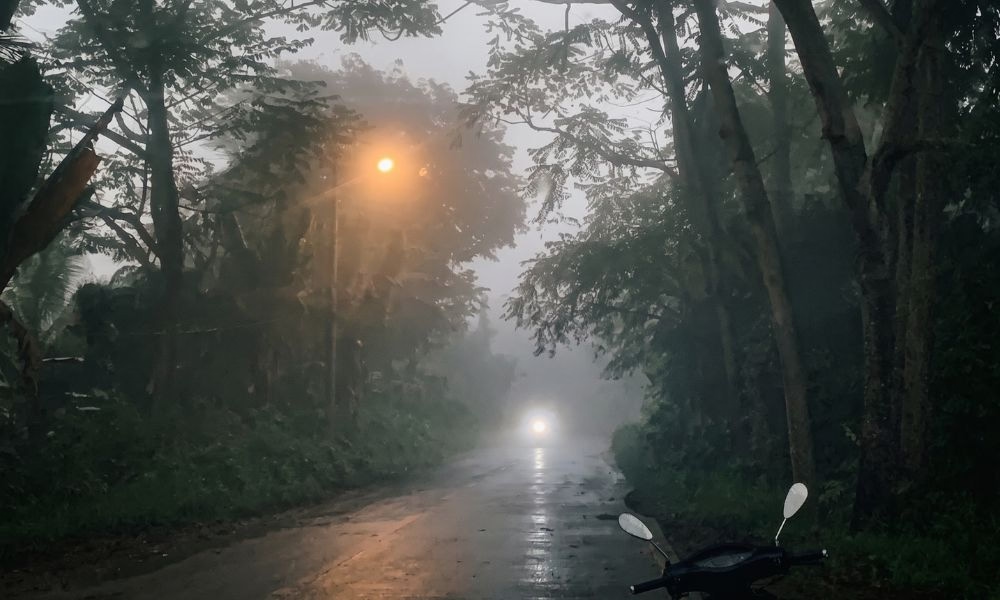
Imagine driving early in the day, with plenty of trees around you and a thin layer of fog hanging just above them. The sun is already coming up, and the sky feels remarkably clear because you are not looking through the kind of heavy haze associated with a densely built-up metropolis. Then, as you continue driving, the landscape gradually changes. Buildings become more frequent, roads become busier, and eventually, you are back in the middle of the city.
That transition is so ordinary to someone who lives here that it can be easy to overlook. For a visitor, however, it can be one of the things that makes Davao memorable.
Davao City Is a Big City, but Downtown Is Only One Part of It
When people talk about Davao, they often picture the downtown area, with its hotels, shopping centers, offices, restaurants, and increasingly tall buildings. That is certainly part of Davao City, and the skyline has changed considerably over the years.
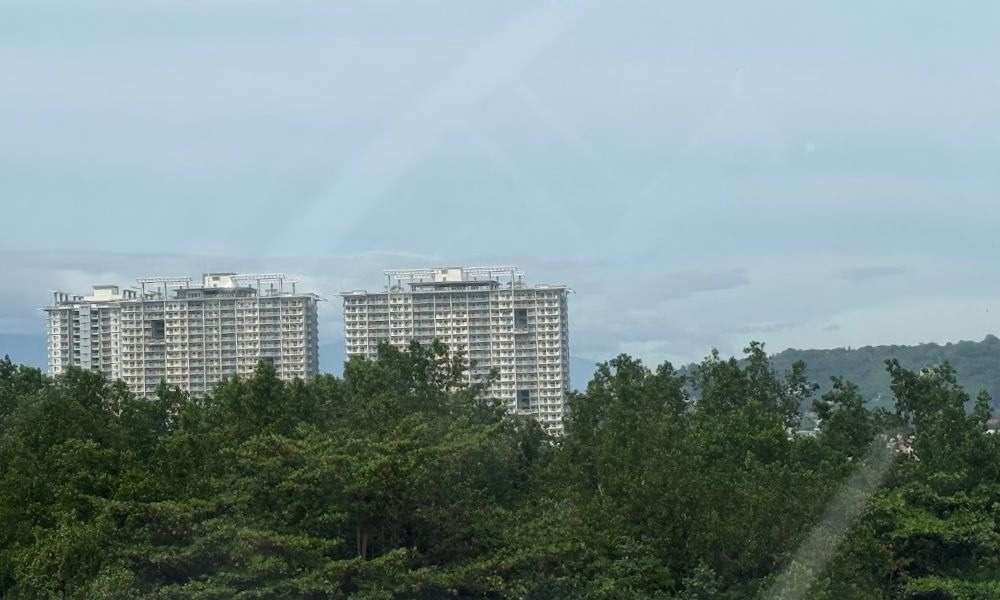
You can see the more modern side of the city around CM Recto Avenue, where high-rise buildings have become part of the landscape, and along JP Laurel Avenue, particularly around the commercial districts near Abreeza Mall.
Then there is the older part of the city, including the area around San Pedro Cathedral and City Hall, where the atmosphere can feel quite different. There are still streets and parks where the pace is less hurried, and the city feels more lived-in than commercial.
What makes Davao City interesting is that you do not have to travel very far to find another side of it.
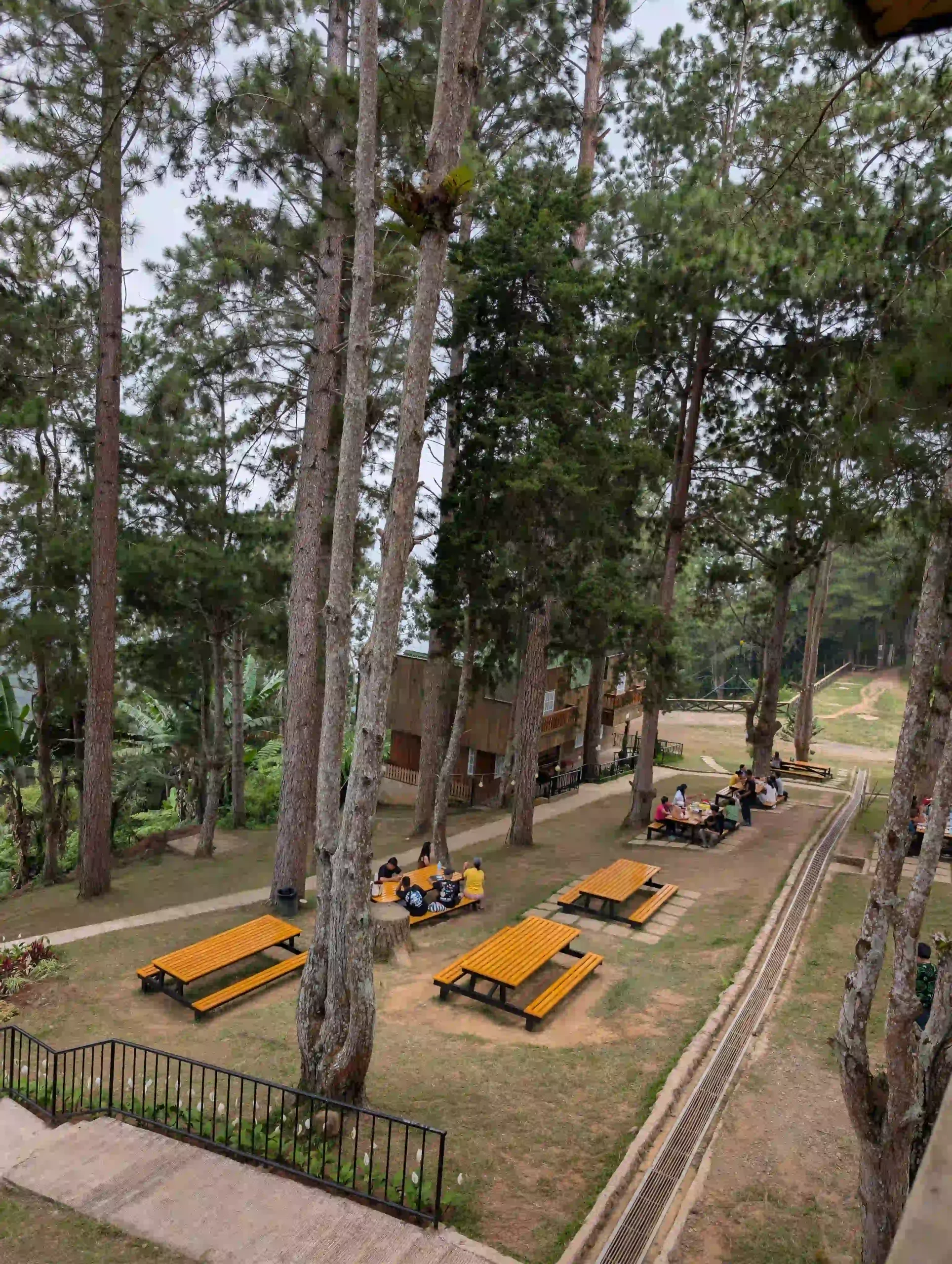
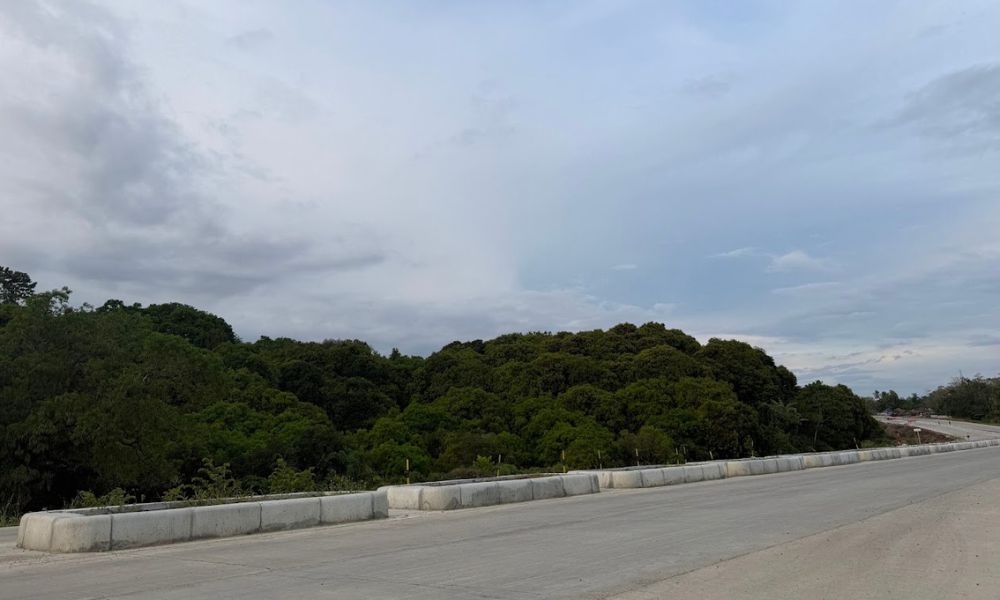
As you head farther from the more densely developed areas, trees become more prominent, open spaces appear, and agricultural landscapes become part of the scenery. Roads may still be developed and busy, but farms and greenery can exist alongside them rather than being completely separated from the city.
That is partly because Davao is so large geographically. What visitors see in the downtown area represents only a small part of the city as a whole.
The Countryside Is Not Very Far Away
One of the things I enjoy about Davao City is that the distinction between city and countryside is not always obvious.
You can be on a road with commercial establishments, malls, and plenty of vehicles, and still find yourself looking at a landscape that feels surprisingly green. Travel farther toward the outskirts, and the transition becomes even more noticeable, with farms, open fields, trees, rivers, creeks, and rural communities becoming part of the journey.
This is particularly interesting for visitors because Davao’s agricultural character is not something that exists only in brochures or in a market display. It is part of the landscape itself.
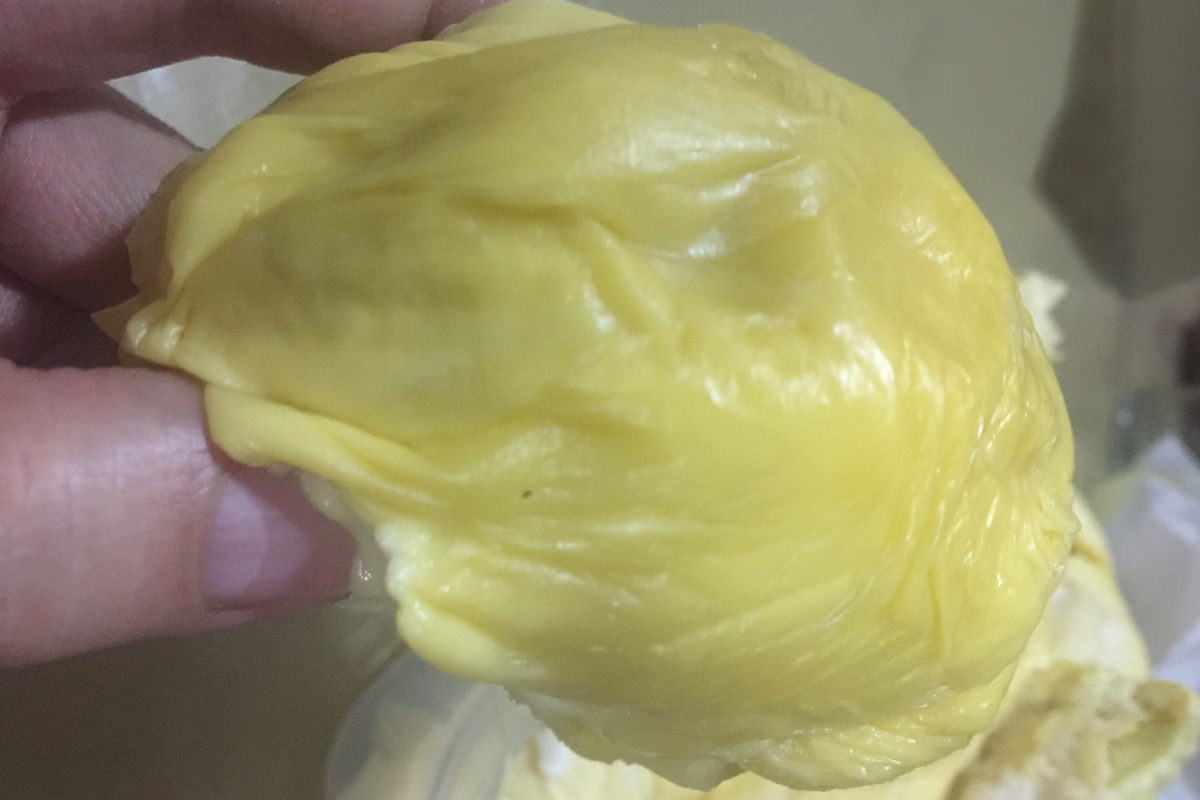
Fruit is a good example. Depending on the season, you can encounter roadside vendors, markets filled with local produce, and agricultural areas where fruit is grown. Visitors can even find farms where they can experience the harvest up close, right where it begins.
You may simply stop along the way for something as familiar as fresh buko juice, or discover local food and drinks that make use of fruits grown in the region. During the fruit season, the abundance is especially noticeable, making it easier to understand why agriculture is such an important part of Davao City’s identity.
You Don’t Have to Leave Davao to Feel Close to Nature
Davao City’s mountains are another part of this unusual combination.
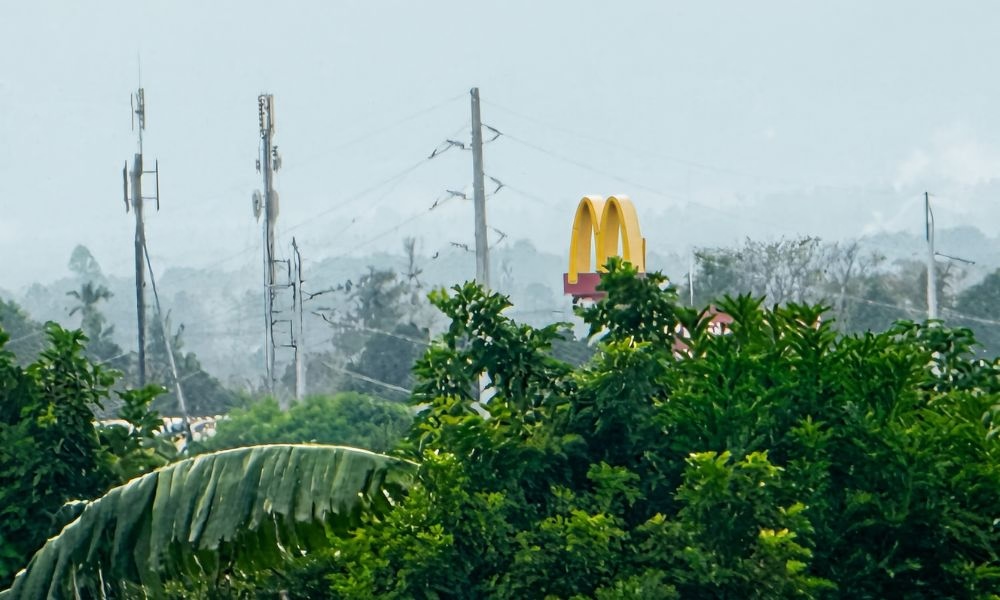
Depending on where you are, mountains such as Mount Apo and Mount Talomo become part of the surrounding landscape, sometimes visible beyond neighborhoods and roads rather than from some carefully selected tourist viewpoint.
That can be easy for locals to take for granted. When you are simply driving somewhere, you may not think much about the fact that there is a mountain in the distance. For someone visiting from a more densely urban environment, however, it can be a reminder that Davao has a very different relationship with its natural surroundings.
The same is true of the trees and open spaces that remain in many parts of Davao City. You do not necessarily need to plan an excursion into the countryside to experience them. Sometimes they are simply part of the road you are already taking.
There is something pleasant about that, particularly when you are accustomed to cities where development seems to continue without much interruption until every available space has been built upon.
Davao is developing, too, but there is still room for development.
Davao City Has Changed, and Longtime Dabawenyos Notice
Of course, Davao is not the same city it was years ago.
Anyone who has lived here for a long time can see that in the traffic alone.
There was a time when “traffic” in Davao City simply meant you had stopped at a traffic light. As the population and number of vehicles have increased, actual congestion has become a more familiar part of everyday life. For someone who grew up here with the experience that almost everywhere was fifteen minutes away, even an ordinary slowdown can feel like a significant change.
That does not mean Davao has suddenly become another Metro Manila, and I would not pretend that my definition of traffic is necessarily the same as someone else’s. It simply shows how much the city has grown.
Development is happening in places that once felt more open. Roads are becoming busier, new buildings continue to appear, and areas that currently have plenty of space may eventually look very different.
Perhaps that is why it is worth appreciating the in-between moments while they are still part of everyday life.
There are places where people can still pull over, buy coffee or something to eat, and spend some time outdoors without turning the experience into a formal tourist activity. As development continues, some of these spaces will inevitably change, but for now, they offer a glimpse of the kind of roominess that has long been part of Davao City’s character.
Laid-Back Does Not Mean Lazy
Davao is often described as laid-back, and there is some truth to that description. But the word can sometimes carry an implication that does not quite fit.
A slower pace does not mean that people here are lazy, unproductive, or living without ambition.
People work, businesses grow, farms produce, families go about their daily responsibilities, and the city continues to develop. The difference is perhaps in the rhythm. There can be a sense that productivity and a slower pace of life need not be opposites.
That is something I appreciate about Davao City.
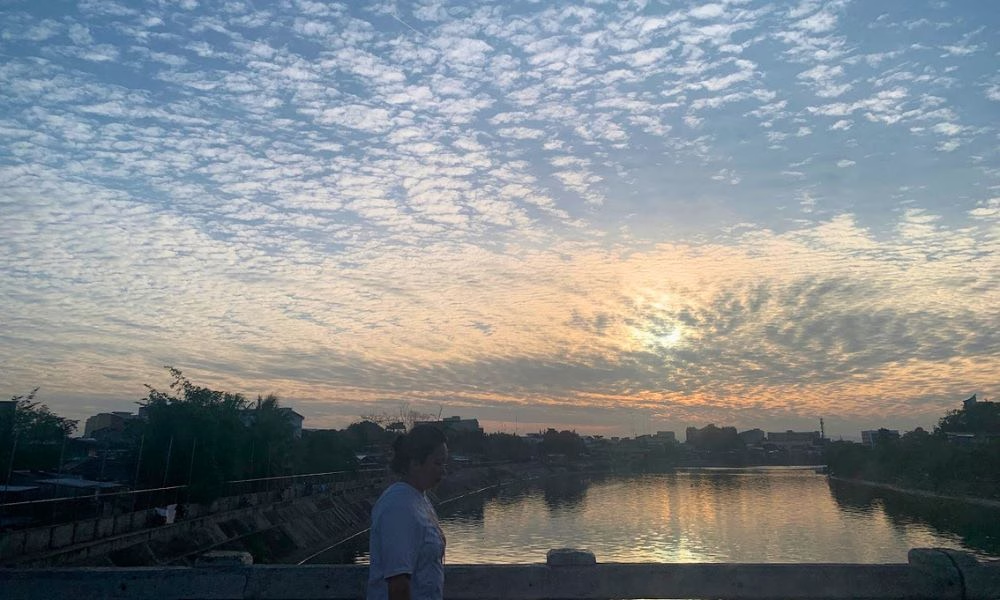
There is a certain practicality to everyday life here, but there can also be space to breathe. You can have a busy day and still enjoy a quiet morning. You can be in a growing city without feeling that every moment has to be rushed.
Visitors may notice this in small ways rather than through any particular attraction. A morning coffee can take its time. A drive can become an opportunity to look around rather than simply get from one destination to another. A meal can be enjoyed without turning it into an event that needs to be photographed and documented.
It is not that Davao has stopped changing. It is that the city has grown while retaining some of the rhythm that people have always associated with it.
Kadayawan Gives You Another Way to See Davao City
This is one reason August is such a fitting time to explore this side of the city.
Kadayawan celebrates the richness and diversity of Davao, and the idea of abundance is particularly fitting given the agricultural landscape surrounding Davao City. The fruits and produce that become more visible during the season are not simply decorations for a festival. They come from farms and communities that are part of the larger Davao landscape.
You do not have to spend the entire festival watching parades to appreciate that.
In fact, you might understand Davao City’s abundance better by simply moving through the city. You may see fruit being sold along the road, find produce in a market, stop for fresh buko juice, or visit a farm where you can experience the harvest closer to its source.
Kadayawan brings these things into the spotlight for a season, but the connection between Davao and the land endures year-round.
That makes the festival a useful invitation to look beyond the celebrations themselves and notice the city that makes those celebrations possible.
There Is More to Discover When You Are Not in a Hurry
One of the advantages of exploring a place you call home is that you do not always feel compelled to turn every outing into an itinerary.
You can take a different road. You can stop somewhere because the scenery caught your attention. You can discover a small food place, buy fruit from a roadside seller, or simply enjoy a drive without needing to reach a particular attraction.
That kind of wandering can reveal a different Davao City.
Instead of only seeing the places that make it onto travel lists, you begin to notice the spaces in between: the older streets near the heart of the city, the trees that have survived around newer developments, the farms beside roads that have become increasingly busy, and the landscapes that remind you that Davao’s urban center is surrounded by a much larger rural environment.
For a visitor, this can be one of the more rewarding ways to experience the city.
You can certainly plan your trip around Davao City’s well-known destinations, but leave some room for the ordinary drive between them. There is a good chance that you will see something that was never on your itinerary.
Davao City’s Rural-Urban Charm
Perhaps Davao is difficult to describe because it does not fit neatly into the categories we often use for cities.
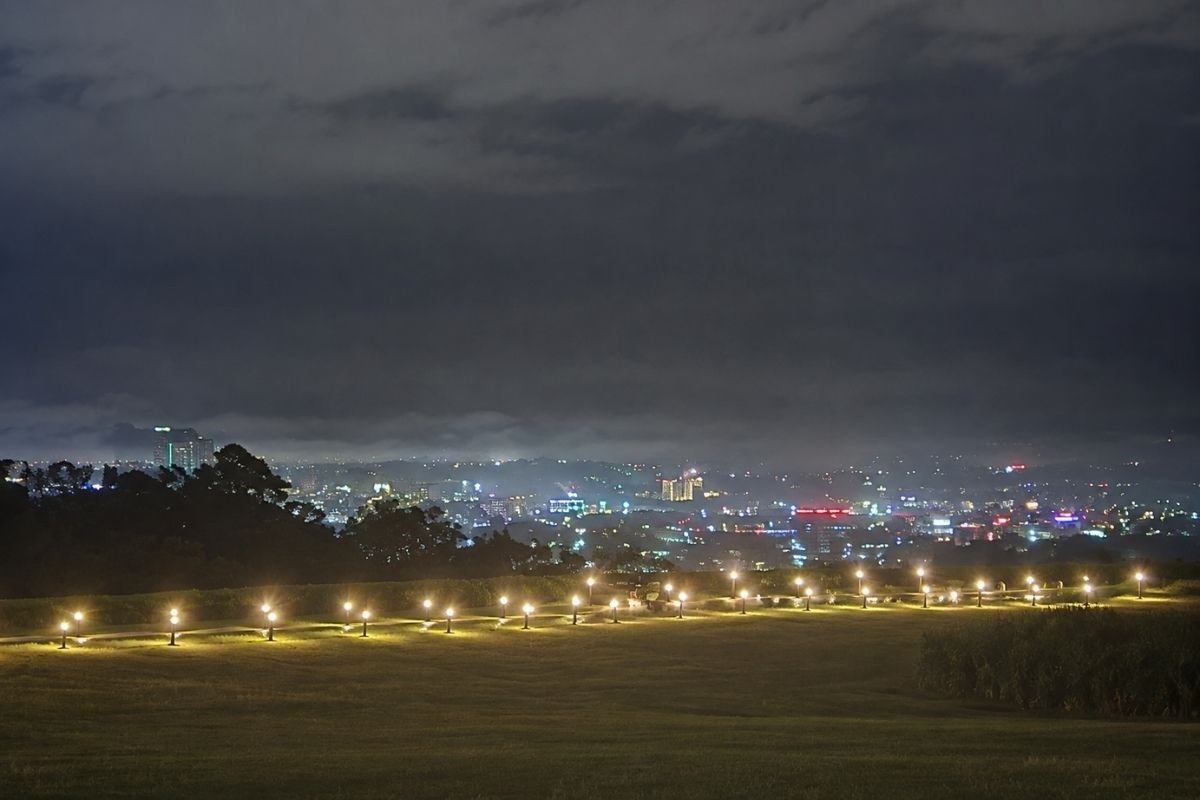
It is undeniably urban, with modern buildings, commercial centers, growing businesses, and increasing traffic. At the same time, its enormous land area means that agriculture, greenery, mountains, rivers, open spaces, and rural communities remain part of the same city.
The contrast is not always dramatic. Sometimes it is simply a matter of driving through one part of Davao City and realizing that the scenery has changed without you ever leaving the city.
That is what I find most appealing about this rural-urban character. Davao can be productive without always feeling frantic, and it can continue to grow without completely losing its sense of space. It is a place where a morning drive can take you from trees and thin fog into the middle of a busy city, while the countryside remains part of the larger landscape around you.
Perhaps that is also why Davao City is easy to explore when you already think of it as home. You do not feel the same pressure to see everything at once. You can simply wander, take another road, and see where it leads.
And for a visitor, that may be one of the best ways to discover Davao: come with a few places in mind, but leave enough room in your day to notice everything in between.
Wander With Joy
At A Joyful Life, we believe that exploring a place does not always have to mean filling your schedule with destinations. Sometimes, the most memorable parts of a journey are found in the ordinary moments, a morning drive, a quiet street, a local meal, a roadside fruit stand, or a view that makes you want to slow down for a while.
That is what Wander With Joy is about: finding the stories, places, food, and everyday experiences that make a destination worth noticing.
If you are visiting Davao City this Kadayawan season, enjoy the celebrations, taste the abundance, and explore the places you came here to see. But give yourself permission to wander a little, too. You may discover that one of the most enjoyable things about Davao City is not simply where you can go, but what you notice along the way.