
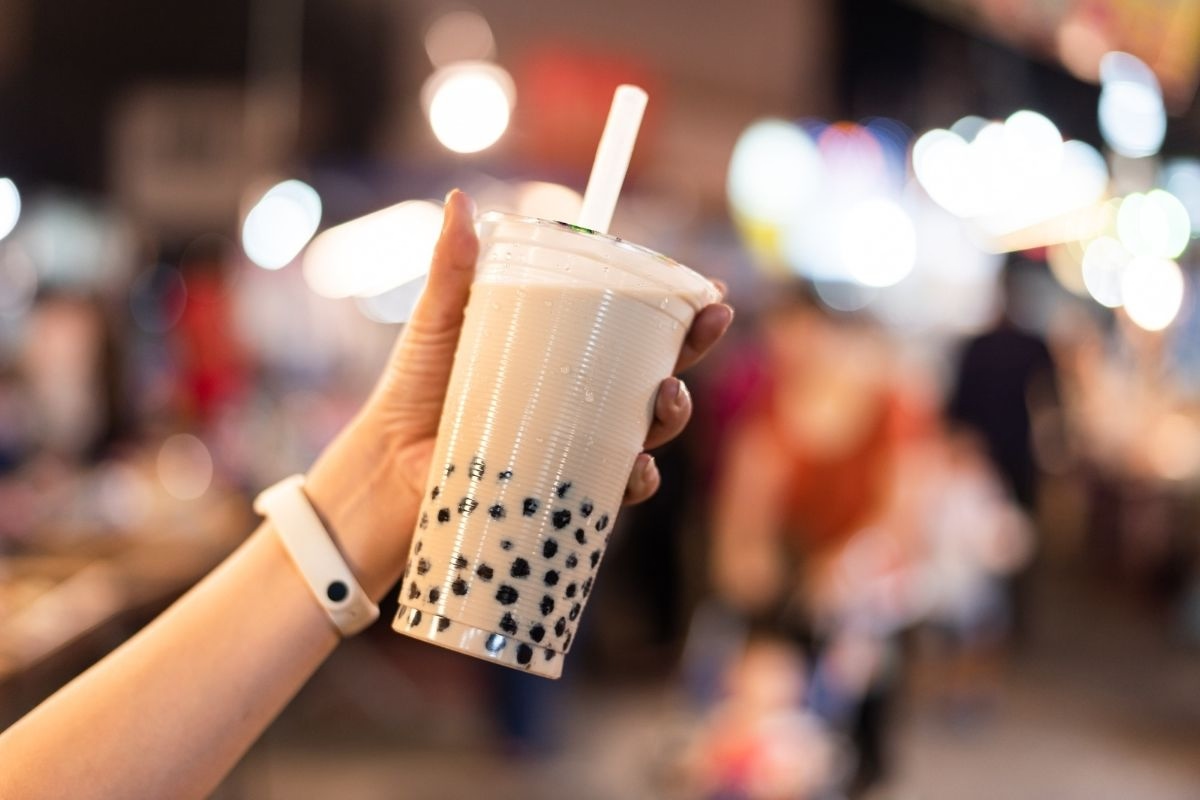
I don’t think I have ever ordered milk tea because I was specifically craving tapioca. I ordered milk tea because I want milk tea.
The tapioca pearls are just part of the experience. Or at least, that’s how I used to think about them.
You know the drill. You order your favorite drink, choose your sugar level, decide whether you want it cold or extra cold, and then there’s that familiar question:
Do you want pearls? Of course, the answer is always yes.
Then you get the drink, take your first few sips, and eventually the straw reaches the bottom of the cup. That’s when the tapioca pearls come into play, chewy little surprises that make you work a little harder for the last few sips.
But what exactly are those chewy pearls? And why is tapioca found in so many different foods?
The more I learned about it, the more I realized that tapioca is much more interesting than I had given it credit for.
- What is Tapioca? Tapioca is a starch extracted from the cassava root, widely processed into pearls, flakes, or baking starch.
- Why Texture Matters: Tapioca pearls add a signature chewiness (q-texture) that transforms drinking milk tea into an interactive sensory experience.
- Beyond Boba: Tapioca acts as a natural thickener and binder in various global culinary dishes and desserts.
- Davao Milk Tea Scene: Classic local and international spots like Gong cha, Tiger Sugar, and Wan Cha continue to shape Davao’s evolving beverage ecosystem.
First, What Exactly Is Tapioca?
Tapioca comes from cassava, a root crop that is widely grown in tropical regions.
The starch is extracted from cassava roots and processed into various forms. Depending on how it is prepared, tapioca can be made into pearls, flakes, or a cooking and baking starch.
So when you bite into those chewy pearls at the bottom of your milk tea, you’re enjoying a form of tapioca.
The tapioca itself doesn’t have a particularly strong flavor. Instead, it brings something else to the table, or in this case, to the cup.
Texture.
And texture can completely change the experience of eating or drinking something. A smooth milk tea is one thing. A milk tea with chewy pearls is another.
You’re not just drinking. You’re chewing, too.
More Than Just Boba
The word “boba” is often used interchangeably with tapioca pearls, although the world of boba drinks has expanded to include many other toppings and ingredients.
Depending on the drink, you might find grass jelly, pudding, nata de coco, popping boba, or other “sinkers” at the bottom of your cup.
Not all of them are tapioca. But the classic chewy black pearls that many of us associate with milk tea? Those are typically made from tapioca starch.
And this is where I started thinking about how funny it is that I enjoy an ingredient for years without ever really asking what it is. I just know that it tastes good and makes our drink more fun.
My Milk Tea Memories
I have tried a very few milk tea shops over the years, so I wouldn’t exactly call myself a milk tea expert.
Some of the names that come to mind are Chatime, Zagu, Pick-Up Coffee, Kanoffee, Bubble Black, MiPanda, and Tea Heaven. Now, I’m confused whether I ordered milk tea or coffee.
That’s a completely random list, by the way. I haven’t checked whether all of them are still around, and I wouldn’t be surprised if the milk tea landscape has changed considerably since I first started trying these drinks.
And how can I forget Starbucks, Fagioli, and Coffee Project?
That’s one of the interesting things about food trends. One minute, there’s a new drink shop on every corner. Then a few years pass, and you suddenly realize that the places you remember have disappeared, changed names, or been replaced by something new.
But the love for milk tea seems to have stayed. And in Davao, there are still plenty of places to explore.
Three Davao Milk Tea Shops I Haven’t Tried Yet
My milk tea education is apparently incomplete.
There are still quite a few popular names in Davao that I haven’t personally tried, so perhaps this is my sign to start exploring.
Here are five that are on my unofficial “maybe I should finally try that” list:
1. Gong cha
Gong cha is one of the familiar international milk tea names in the Philippines, and it has a presence in Davao as well.
I’ve somehow managed to have it on my radar without making it a regular order.
Perhaps I should finally change that.
The current Davao menu includes milk teas, fruit teas, and even coffee-based beverages, so there seems to be plenty to explore beyond the classic milk tea.
2. Tiger Sugar
Tiger Sugar is another one I’ve been meaning to try.
The brand is particularly associated with its brown sugar drinks, and its presence in Davao makes it an obvious candidate for my little milk tea adventure.
I have a feeling that if I finally try it, I will have to get the version with pearls.
After all, we’re talking about tapioca here..
3. Wan Cha
Wan Cha is another Davao option that I haven’t explored yet.
It shows up on my newsfeed, which makes me curious about what people are ordering. Maybe this is the one I should try next.
Or maybe I should try all five. You know, for research. Strictly for research.
Dear Milk Tea Shops of Davao, This Is a Hint
At this point, I would like to make an official announcement.
If you own or manage a milk tea shop and are looking for someone to send a sampler to, I am available.
I am kidding. Mostly.
But if you do send one, I promise to approach the assignment with the seriousness it deserves. I will taste. I will observe. I will investigate the tapioca-to-milk-tea ratio. I may even have to call in reinforcements.
Because while I started this article thinking about tapioca, I have a feeling I may have accidentally talked myself into a milk tea adventure.
Tapioca and Coffee? Apparently, Yes.
Here’s another thing I found interesting. Tapioca isn’t limited to tea-based drinks.
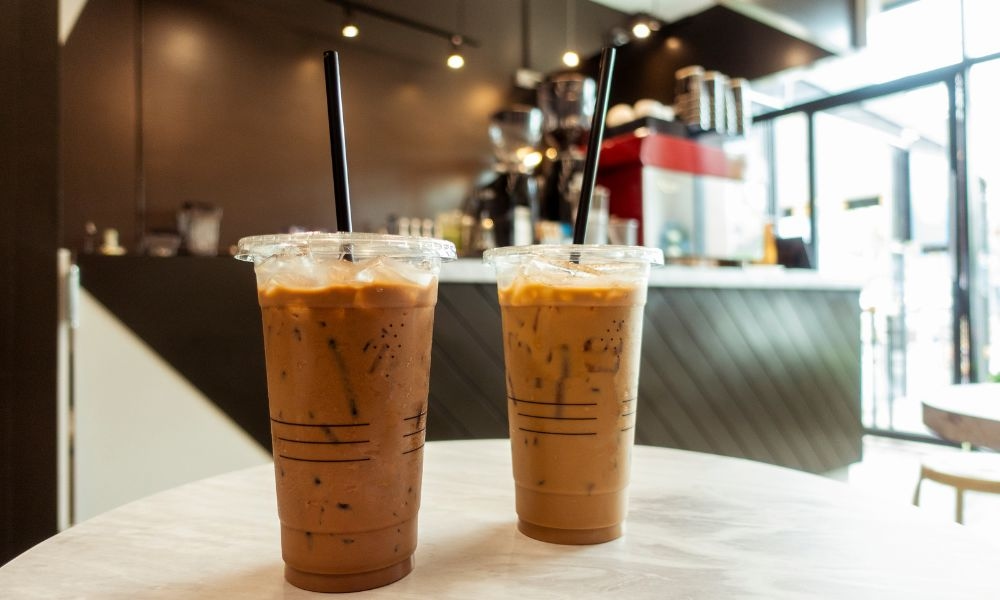
Some coffee and beverage shops also offer drinks with tapioca pearls or other chewy toppings. And some milk tea brands have started playing around with coffee and tea combinations.
For example, some include coffee, milk tea, and brown sugar coffee milk tea, as well as a brown sugar coffee smoothie with pearls.
I have coffee in my random list because, for many of us, coffee and milk tea now exist in the same beverage universe.
There was a time when the choice was simple:
Coffee or tea?
Now we have coffee milk tea, brown sugar lattes, matcha lattes, milk tea with coffee, and all sorts of combinations that would probably confuse someone from a few decades ago.
And somewhere in that mix, tapioca pearls are still hanging around. Literally. At the bottom of the cup.
What Else Can You Do With Tapioca?
If your only association with tapioca is milk tea, you might think of it as a trendy drink ingredient. But tapioca has been used in cooking and baking in many forms.
Tapioca starch can be used as a thickener. It can contribute chewiness and texture to certain baked goods. Tapioca pearls can also be used in desserts, puddings, and sweet dishes.
In other words, the little black pearls at the bottom of your milk tea are only one expression of a much more versatile ingredient.
We see them in our food all the time, but we don’t always stop to ask where they came from, how they’re made, or what else they can do.
Sometimes, a simple question like “What exactly is tapioca?” opens the door to a much bigger story.
So, Is Tapioca Worth the Hype?
I think the answer depends on what you’re looking for. If you want something with a strong flavor, tapioca pearls probably won’t impress you on their own. But if you like texture, they add something special to a drink.
There’s something satisfying about that contrast between a cold, creamy or tea-based drink and the chewy pearls you find at the bottom. And maybe that’s why tapioca has stayed popular. It’s not necessarily the star of the show. It doesn’t have to be.
Sometimes, the best things are the ones that quietly enhance the experience. The next time someone asks me if I want pearls in my milk tea, I’ll probably still say yes.
A Little Milk Tea Challenge
Now I need to know. What is your favorite milk tea in Davao?
And which shop should I try next?
My list of three is completely unofficial, and I am very open to recommendations. If you’re from Davao and think I’ve been missing out on an amazing milk tea, tell me what to order. And if you’re a milk tea shop owner reading this, well…
You know where to find me. I’m willing to conduct very serious tapioca research.
And maybe that’s one of the things I enjoy most about writing here at A Joyful Life. Sometimes, the most interesting stories are hiding in the most ordinary things, even in a cup of milk tea and the little chewy pearls at the bottom.
If this is the kind of honest, everyday living content that speaks to you, you’ll find more of it here on A Joyful Life, where we write about the home, the work, the faith, and the little things that hold our days together.